
This course is available with a live instructor
onsite or through a virtual platform.
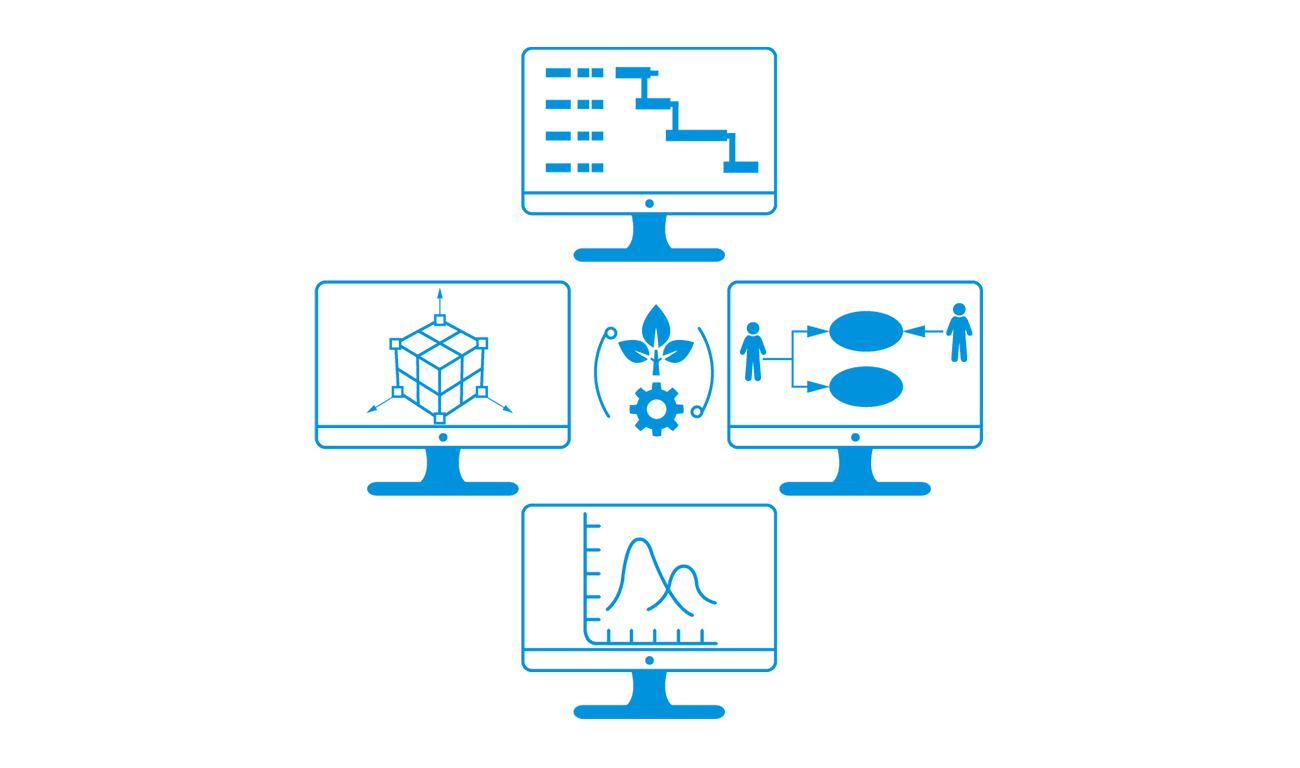
Digital transformation looks good on a powerpoint slide—but difficult to implement. Many organizations invest in tools first before deciding on what questions digital engineering should answer or problems it should solve. The Foundations of Digital Engineering course equips you to make deliberate decisions about where digital capabilities add value—and where they don’t.
The course introduces the Digital Trinity—Lean-Agile, Open Architectures, and Digital Engineering—and explains how they reinforce one another. MBSE is presented as the “model of the models”—a unifying discipline that connects engineering artifacts, enables traceability, and supports better lifecycle decisions. Ontologies, frameworks, and the challenge of defining an Authoritative Source of Truth are examined in practical, organizational terms.
Rather than promoting specific tools, the course focuses on judgment: how to assess maturity, prioritize investments, and guide digital transformation at a sustainable pace.
Are you being asked to “go digital” without a clear roadmap? Not sure how MBSE fits in to digital engineering? Responsible for shaping transformation rather than just implementing tools? This course is designed for project engineers and managers guiding digital engineering adoption in their organization.
At the end of this course you will be able to:
✦ Compare and contrast analog engineering, traditional Digital Engineering, and the value proposition for more fully integrated Digital Engineering ecosystems
✦ Explain the elements of the Digital “Trinity” and how they relate to each other
✦ Describe the Lifecycle Modeling Framework as a thinking tool to conceptualize integrated Digital Engineering ecosystems
✦ Understand the DoD Digital Engineering Strategy goals and their associated metrics in the INCOSE maturity guide
✦ Characterize types of engineering and project models and their application across the product lifecycle
✦ Generalize the challenges and techniques for developing, integrating, and curating models
✦ Analyze approaches for using models to evaluate digital trends in a system
✦ Explain the advantages of having an Authoritative Source of Truth (ASOT)
✦ Discuss the challenges of managing multiple sources of truth in a project
✦ Describe the elements and requirements for an idealized Digital Engineering Ecosystem, including data-sharing models
✦ Evaluate current commercial Digital Engineering ecosystem products
✦ Discuss the potential applications for AI/ML to enhance the value of Digital Engineering
✦ Appreciate the IT requirements and challenges of establishing an integrated Digital Engineering ecosystem across an enterprise
✦ Recognize the value of agile techniques to accelerate digital transformation in an organization (DevSecOps)
✦ Apply the INCOSE maturity metrics to evaluate the transformation state of your organization
✦ Discuss plans of action to lead and support digital transformation, including workforce development requirements
✦ Module 001 – Introduction to Digital Engineering
• The “Digital Trinity”—Lean-Agile, Open Architectures, and Digital Engineering
• Lifecycle Modeling Framework
✦ Module 010 – Using Models and Defining the Truth
• Model-based Systems Engineering
• Ontologies, Languages, and Frameworks
• Developing and Curating Models
• Authoritative Source of Truth (ASOT)
✦ Module 011 – The Digital Enterprise
• Digital Ecosystems
• Artificial Intelligence and Machine Learning
✦ Module 100 – Digital Environments
• IT Challenges
• DevSecOps
✦ Module 101 – Transforming the Workforce
• INCOSE Maturity Metrics
Each participant will receive:
• A complete set of course notes with copies of all slides used in the presentations
Digital badges are web-enabled versions of a credential or certification which can be verified online.
Click here
for eligibility and request process.