
This course is available with a live instructor
onsite or through a virtual platform.
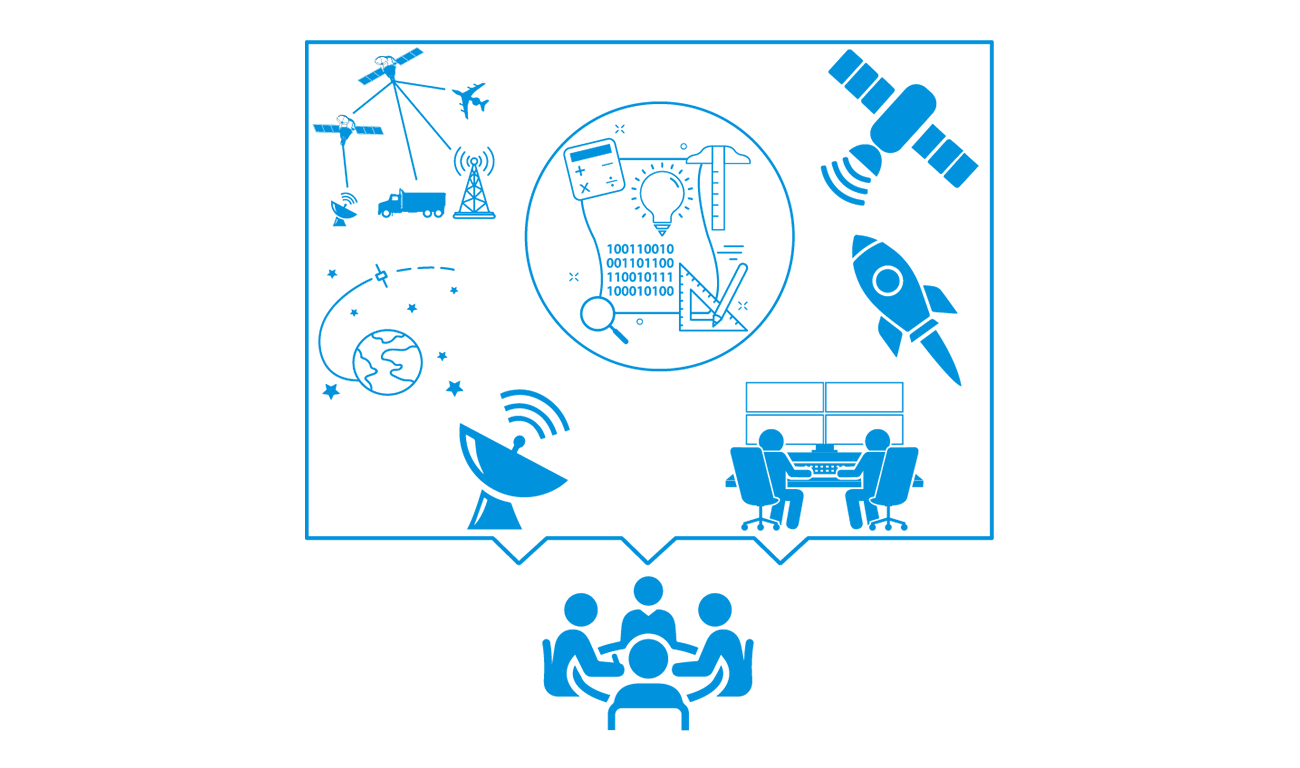
Space mission concepts live or die at the design review. The Mission Design Workshop places you in that moment—tasked with designing a credible mission and defending it under scrutiny. In this hands-on workshop, you are given a realistic Request for Proposal (RFP) or Announcement of Opportunity (AO) and organized into a mission design team. Your objective: translate mission goals into a defensible architecture that meets performance objectives while balancing cost, risk, and operational constraints. Every assumption must be justified. Every design decision and trade-off must be explained.
The workshop follows a structured systems engineering approach—interpreting requirements, defining concepts, evaluating architectures, and analyzing trade space. Short, just-in-time instruction introduces tools and techniques exactly when needed, but most of the time is spent designing, debating, and refining your mission.
Teams use mission analysis methods and structured engineering artifacts to quantify trade-offs and strengthen architectural coherence. Basic orbit design and mission design tools are provided to facilitate detailed analysis. MBSE concepts are introduced where they clarify relationships and improve reasoning, without turning the exercise into tool training.
The course culminates in a formal Mission Concept Review (MCR). You present, defend, and respond to hard questions about feasibility, risk, and value—gaining practical confidence in making and defending architecture decisions.
Are you developing mission concepts? Evaluating competing architectures? Preparing for real design reviews? This course is designed for systems engineers, principal investigators, subsystem engineers, and project managers who need hands-on experience making and defending mission-level decisions.
At the end of this course you will have the knowledge, tools and experience to turn customer expectations in the form of an RFP or AO into a fully-defined mission concept, or critically analyze proposed mission concepts with insight into the critical trade-offs between cost, schedule, performance and risk.
✦ Cultivate a better understanding of the overall space mission design process
• Technical processes, tools and information available
• Interpersonal skills and distributed collaborative efforts
✦ Exercise space system engineering processes
✦ Enhance space system engineering skills
• System engineering management
• Technical integrity
• Technical leadership
✦ Integrate all elements of a successful mission
✦ Establish a process to refine requirements
✦ Define parameters to meet mission objectives at acceptable cost and risk
✦ Promote system-level thinking by all participants
Example Course Exercise Problems:
✦ Commercial Remote Sensing Mission
✦ Tsunami Detection and Tracking Mission
✦ Mars Mapping Mission
✦ Mars “Deep Impact” Mission
Each participant will receive:
• A complete set of course notes with copies of all slides used in the presentations
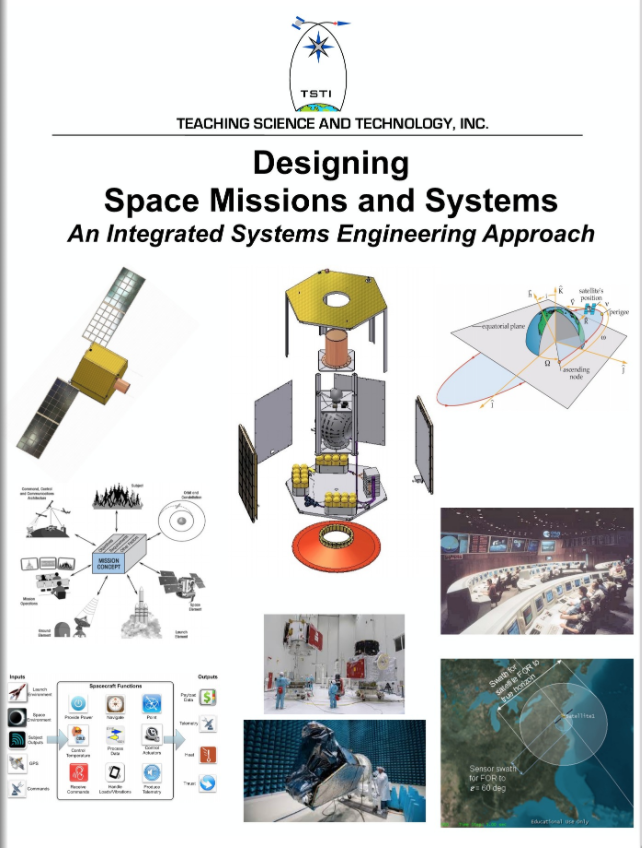
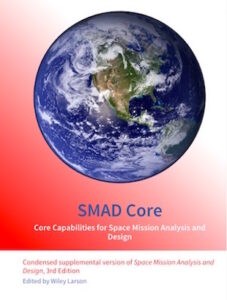
• A copy of the course text SMAD Core: Core Capabilities for Space Mission Analysis & Design
• Space Mission Analysis & Design Worksheet (Comprehensive Excel Spreadsheet)
• A fully licensed copy of Satellite Tool Kit software by AGI, licensed for the duration of the course
Digital badges are web-enabled versions of a credential or certification which can be verified online.
Click here
for eligibility and request process.