

This course is available with a live instructor
onsite or through a virtual platform.
Systems engineering is not optional. How, when, and to what depth it is applied, is. Space programs often struggle not because rigor is absent, but because it is misapplied—too much formality slows progress, too little discipline allows risk to grow unchecked. Applied Space Systems Engineering (ASSE) helps you apply the right level of systems engineering rigor, at the right time, for the right reasons.
This course focuses on the execution of systems engineering—how space systems are actually delivered under real constraints.
You’ll learn how to calibrate rigor based on mission objectives, technical risk, maturity, and program context, maintaining disciplined control without creating unnecessary friction. The emphasis is on engineering judgment: knowing when to be streamlined, when to be rigorous, and how to adjust as programs evolve.
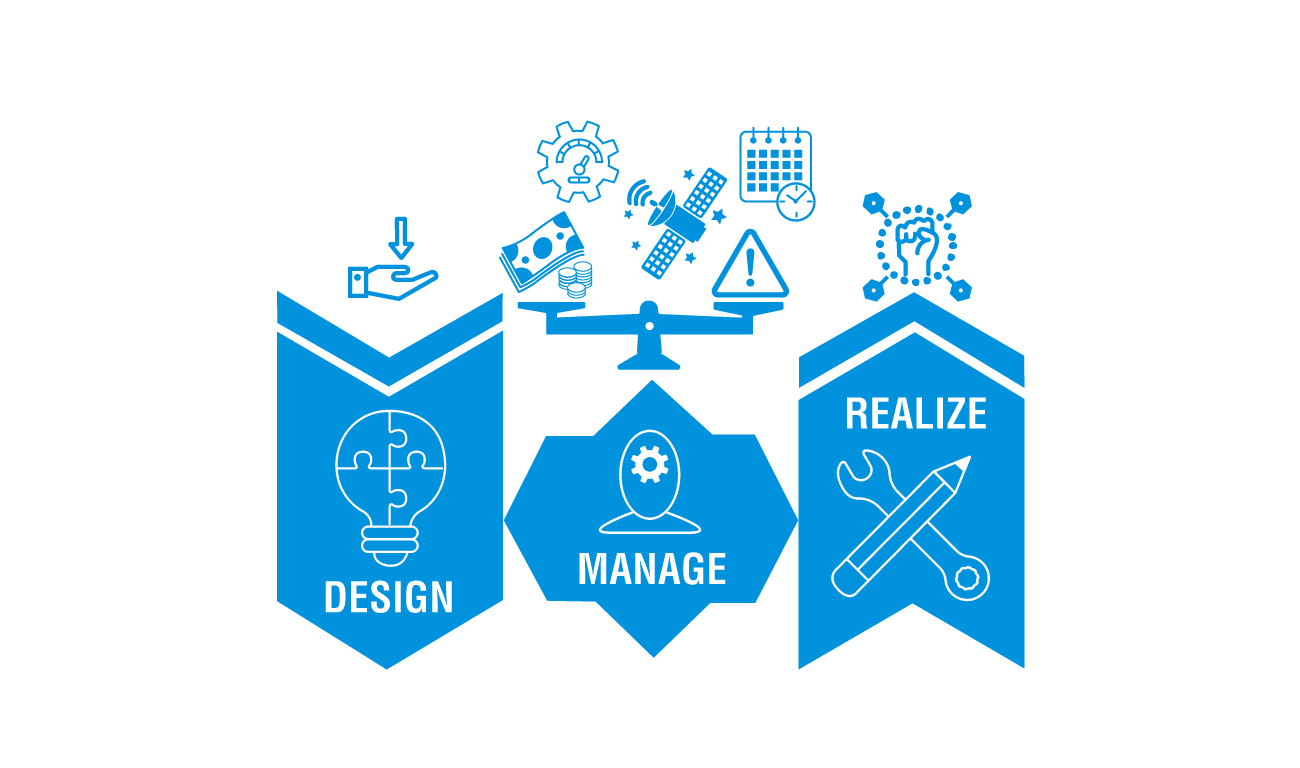
ASSE emphasizes practical application as programs progress from design—what we want to build— into realization—building, delivering and sustaining. Core systems engineering processes are examined across the project lifecycle, with attention to how requirements, technical baselines, interfaces, and configuration are managed.
A threaded case study translates theory into practice through concrete examples of requirements management, solution architectures, interface control, verification planning, and technical alignment—reinforcing systems engineering as an execution discipline, not a paperwork exercise.
Are you struggling to develop and manage system requirements? Are your system interfaces undefined or unstable? Are verification activities disconnected from customer expectations? ASSE is designed for systems or discipline engineers, principal investigators, and project managers faced with making the hard decisions needed to deliver systems and capabilities under real-world constraints.
At the end of this course you will be able to:
✦ Define key systems engineering terms
✦ Explain fundamental systems engineering principles
✦ Apply systems engineering tools and techniques to solve specific design, manage and realization challenges
✦ Develop relevant systems engineering artifacts for a given scenario that captures and communicates design, systems management and system realization decisions
✦ Designing Systems
• Stakeholder Expectations and Requirements
• Operations Concept and Mission Architecture Development
• Technical Requirements Engineering
• Logical Decomposition & Physical Solutions
✦ Managing the System Engineering Processes
• Technical Planning
• Interface Management
• Risk Management
• Configuration & Technical Data Management
• Technical Decision Analysis
• Systems Engineering Management Planning
• Technical Reviews
✦ Realizing Systems
• System Implementation (buying/building/re-using)
• System Integration
• System Verification & Validation
• System Transition and DevOps
✦ Detailed End-to-End Case Study
✦ Hands-on Exercises
Each participant will receive:
• A complete set of course notes with copies of all slides used in the presentations
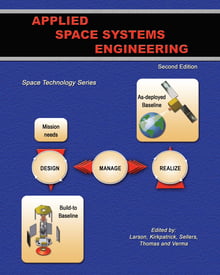
• An e-copy of the Applied Space Systems Engineering textbook
Digital badges are web-enabled versions of a credential or certification which can be verified online.
Click here
for eligibility and request process.