

This course is available with a live instructor
onsite or through a virtual platform.
COMING SOON: This course is also available on-demand, working at your own pace.
Mission operations do not begin at launch—they begin on day one of the project. Decisions you make early—often before designs are mature—lock in operational complexity, staffing needs, ground architectures, and long-term cost. For many missions, operations ultimately become the largest contributor to total lifecycle cost and risk. The Space Mission Operations (SMO) course focuses on the operational and organizational decisions that determine whether a mission can be executed reliably, affordably, and sustainably under real-world constraints.
This course treats mission operations as an engineered capability, not an afterthought. It takes an end-to-end, functional view of operations, starting with operations planning and Concept of Operations (ConOps) development. You will then examining how
operational requirements are defined and responsibilities allocated across spacecraft, payloads, ground systems, and operators.
The aim is to develop an understanding of the practical constraints on space operations. These include orbital mechanics, telemetry, tracking and command (TT&C), data delivery, personnel, and ground system architectures. Operational execution is explored through contingency planning, anomaly response, flight control, and organizational readiness—highlighting trade-offs between automation, human involvement, resilience, risk and cost.
How will your mission deliver real value to users once its in space? Can you practically operate what you’re designing? Preparing for first flight? SMO is designed for engineers, operators, and project leaders responsible for planning, designing, or executing space mission operations.
At the end of this course you will be able to:
✦ Define and explain the critical activities of space mission operations
✦ Develop a mission concept of operations
✦ Describe the elements that contribute to mission operations complexity and perform trade-off analyses to reduce that complexity
✦ Apply principles of orbital mechanics to plan and implement key operations activities
✦ Describe and analyze key elements of mission ground systems including communication link budgets
✦ Compare and contrast operations concepts for military, civil, scientific and human space missions
✦ Develop the planning, execution and support requirements for real-time space mission operations
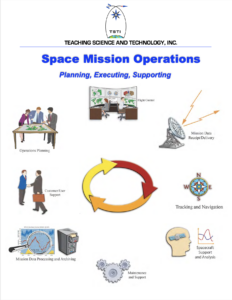
✦ Course Introduction and Overview
• Course Introduction
• Mission Operations Overview
✦ Mission Operations Planning
• ConOps Development
• Operations Complexity
✦ Tracking and Navigation
• Understanding and Using Orbits
• Predicting Orbits
✦ Mission Data Receipt and Delivery
• Introduction to TT&C
• Ground Systems and Communication Architectures
✦ Spacecraft Support and Analysis
• Environmental Effects and Spacecraft Design
• Contingency Planning and Anomalies
✦ Flight Control and Training
• Activities, Roles and Responsibilities
• Organization and Training
✦ Numerous case studies and exercises throughout the course
Each participant will receive:
• A complete set of course notes with copies of all slides used in the presentations
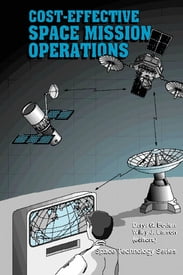
• An e-copy of the Cost Effective Mission Operations textbook (not included with online course)
Digital badges are web-enabled versions of a credential or certification which can be verified online.
Click here
for eligibility and request process.